Expansive Soil and Water Pipe Damage: What Homeowners Should Know
Some soils swell when they get wet and shrink when they dry out. A water line buried in that soil gets pushed and pulled every season. Here is what that means for your main line.
- By Diamond Bar Plumbers
- Published Nov 1, 2026
Most people think of pipe failure as a matter of age and material. Ground conditions matter too. In parts of the region, hillside grading and clay soils put buried water lines under steady stress that can shorten their life.
What expansive soil is
Expansive soils, also called shrink-swell soils, change volume as their moisture content changes. They expand when wet and contract when dry. The behavior comes from certain clay minerals, mainly smectite and montmorillonite, which absorb water into their structure (shrink-swell capacity). The more of those minerals a soil contains, the more it moves.
How it damages pipes
A shallow pipe sits in the zone where soil moisture changes with the seasons. As that soil swells and shrinks, it presses on the pipe, shifts it and pulls at its joints. Over time this stress can crack rigid pipe or work fittings loose until they leak.
The problem can also feed itself. A leaking pipe adds water to the surrounding soil, which causes localized swelling, which can stress the pipe and nearby structures further. A small leak in expansive soil is worth fixing quickly.
Why hillside lots add to it
Many homes in the hills around Diamond Bar sit on graded pads, where soil was cut from one area and filled in another. Fill can settle over the years, and slopes can creep slowly downhill. Communities like Chino Hills, Walnut and Hacienda Heights have a lot of hillside housing where these effects can show up.
Warning signs
- Leaks at joints or fittings rather than in the middle of a pipe run.
- Repeat leaks along the same line.
- Cracks in walkways, driveways or patio slabs near the line's route.
- Doors or windows that start to stick, a sign the house itself is moving.
- A wet area that appears after heavy rain and does not dry out.
How to protect a water line in clay soil
You cannot change the soil under your yard, but you can reduce how much it stresses the line. These four steps make the biggest difference.
1. Choose a material that tolerates movement
Flexible PEX can accommodate small shifts in the soil better than rigid pipe. That does not make it immune, but it is one reason PEX is often a good fit on clay and hillside lots. Our pipe material guide compares the options.
2. Bed and backfill the trench properly
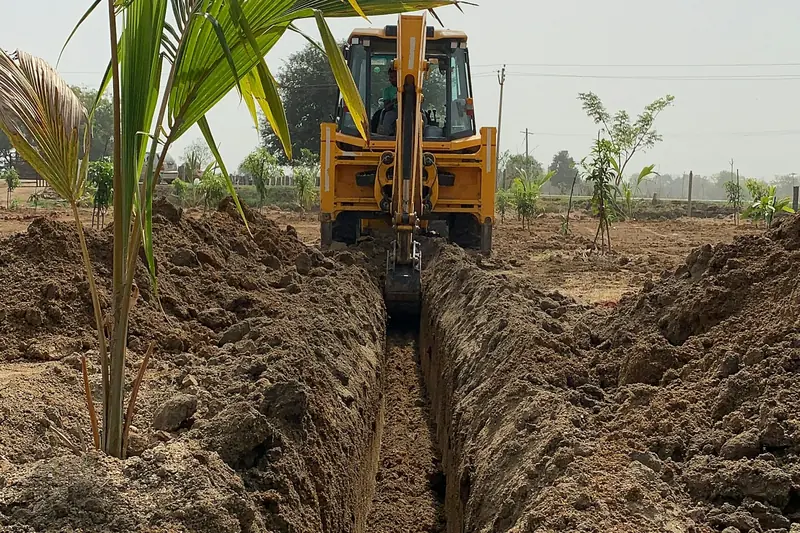
How the trench is prepared matters as much as the pipe. Proper bedding gives the line an even base, and backfilling in compacted layers reduces settling. Careless backfill is one reason some trenches sink and stress the pipe after installation. See how we handle trenching.
3. Keep moisture steady
Big swings between soaked and bone-dry soil drive the most movement. Consistent irrigation, good drainage away from the house, and fixing leaks quickly all reduce the swings.
4. Reroute when the old path is the problem
If the existing line runs under a slab or through an area that keeps moving, a new route on more stable ground may last longer than repeated repairs. Rerouting is worth considering when the same stretch keeps failing.
How to tell if your soil is expansive
You do not need a lab to get a sense of it. Clay-heavy soil becomes sticky and slick when wet and cracks into hard plates when dry. Wide cracks that open in the yard during late summer are a common sign. Grading and soils reports prepared when a home was built, if you have them, often describe the soil type directly.
If you are planning a major project, a geotechnical engineer can test the soil. For a water line, the practical question is simpler: has the ground around the line moved, and is the pipe showing stress at its joints?
Seasonal timing
Movement tends to be greatest when soil goes from very wet to very dry, or the reverse. In Southern California that often means the first heavy rains after a long dry summer, or the drying period that follows a wet winter. Leaks that show up at those times on a clay lot are worth checking promptly rather than waiting to see if they dry out.
Is this the same as a foundation problem?
The same soil behavior that stresses pipes can also move slabs and footings, which is why sticking doors and cracked walls can appear alongside a leaking line. A plumber can address the water line, but movement in the house itself is a question for a foundation or structural professional. Fixing a leak promptly helps both, since it removes one source of the moisture that drives the swelling.
When to call
If you are seeing repeat leaks, cracks near the line, or wet spots after rain on a hillside or clay lot, call us. We will look at where the line runs and whether the soil is part of the problem, then recommend a repair, a replacement or a new route.
Questions about your main line? Call us.
A person answers 24/7, and same-day visits are available.