Water Line Repair vs Replacement: How to Decide
When the main line leaks, you have two options: fix the damaged section or replace the whole run. Here is how to weigh them.
- By Diamond Bar Plumbers
- Published Nov 1, 2026
Nobody wants to replace a pipe that still has years left in it. Nobody wants to pay for three repairs on a line that should have been replaced after the first. The right choice depends on a handful of factors you can usually assess before any work begins.
When a repair makes sense
A repair fixes the failed section and leaves the rest of the line in place. It is usually the right call when:
- The line is relatively new, such as copper or PEX installed in the last couple of decades.
- The damage has a clear outside cause, like a shovel, a fence post or a single tree root.
- This is the first leak the line has had.
- The pipe on both sides of the damage looks sound once it is exposed.
- Water pressure was normal before the leak started.
A good repair on a healthy line can last as long as the rest of the pipe. There is no reason to replace a line just because it leaked once.
When replacement makes sense
Replacing the line swaps the entire run between the meter and the house. It tends to be the better choice when:
- The pipe is galvanized steel, which corrodes from the inside and tends to fail in more than one place.
- You have already repaired the line once or twice.
- Pressure has been fading for years, not just since the leak.
- Water is discolored at several taps.
- The exposed pipe shows corrosion, pitting or thin walls beyond the leak.
- The line runs under a slab or driveway where future repairs would be costly.
If more than two of those apply, a repair is likely to buy limited time.
The material question
What the line is made of is often the deciding factor. Older homes in the area may still have galvanized steel, which narrows with rust and fails at threaded joints. Our guide to pipe materials covers the differences in detail. In general, a leak in galvanized pipe is a strong signal to replace the line, while a leak in copper or PEX often is not.
Galvanized lines can also matter for lead regulations. The U.S. EPA's service line inventory rules include a category called "galvanized requiring replacement" for galvanized lines that are or ever were downstream of a lead service line (EPA fact sheet). Your water provider can tell you how your service line is classified.
Think about the route, not just the pipe
Where the line runs changes the math. A leak under open lawn is simple to reach and repair. A leak under a driveway, patio or the house itself means breaking and replacing hardscape every time something goes wrong. In those cases, rerouting the line along a new path can cost less over time than repeated repairs in a hard-to-reach spot.
Questions to ask before deciding
- How old is the line, and what is it made of?
- Is this the first leak, or has the line been repaired before?
- What does the pipe look like on either side of the damage?
- How was the water pressure before the leak?
- What sits on top of the line along its route?
- Are you planning landscaping, hardscape or a remodel soon?
The last question matters more than people expect. If new pavers or a patio are going in next year, replacing or rerouting the line first avoids tearing up new work later.
Permits apply either way
Replacing a water service line is regulated work. The California Plumbing Code requires a permit for the installation, alteration, repair or replacement of a plumbing system, with narrow exceptions for minor leak repairs that do not involve replacing pipe (CPC section 104). Our post on water line permits in Diamond Bar covers the local side.
What a repair actually involves
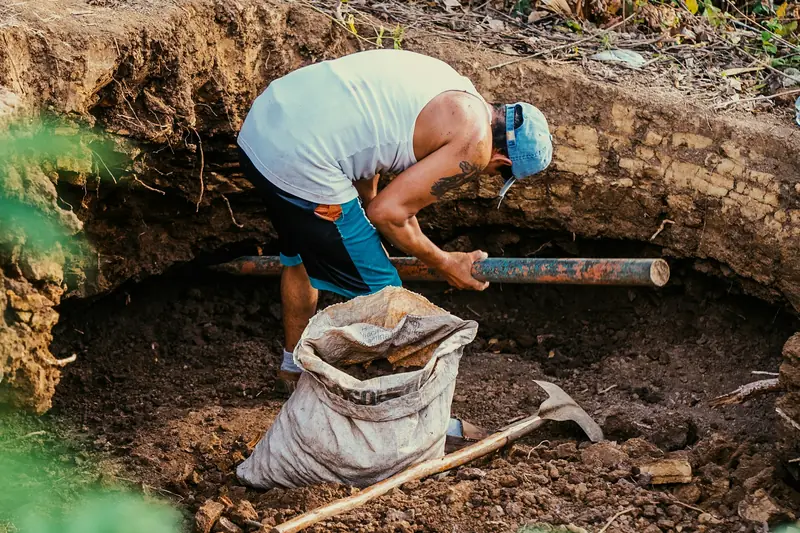
A typical repair means exposing the leak, cutting out the damaged section and splicing in new pipe with proper couplings. Done well, the splice is as strong as the pipe around it. The catch is that a repair only fixes the spot that failed. If the rest of the line is aging at the same rate, the next weak point is waiting a few feet away.
What replacement actually involves
Replacing the line means a new run from the meter side to the house, connected at both ends and pressure tested before it is buried. It takes more digging than a repair, but it resets the clock on the whole line rather than one section. It is also the moment to fix an undersized line or swap a worn main shutoff valve.
A rule of thumb for repair or replace
One leak, good pipe, clear cause: repair. Repeat leaks, old or galvanized pipe, or a line under hardscape: replace or reroute. If you are not sure which side of that line you are on, call us. We will look at what is actually in the ground and tell you plainly which option we would choose in your position.
Questions about your main line? Call us.
A person answers 24/7, and same-day visits are available.