Water Line Replacement Cost: What Affects the Price
Every main line job is priced on what is actually in the ground. Here are the factors that move the number, so you know what to expect before we visit.
- No price list
- Priced after we see the line
Why no price list
Why we price after seeing the line
Two houses on the same street can need very different jobs. One has a short run under lawn; the other has a long run under a driveway, a retaining wall and a mature tree. A single price list cannot account for that, so we do not publish one.
What we can do is explain what drives the cost. Once you understand the factors below, the number we give after a visit will make sense, and you will know which questions to ask.
Talk to a local pro →
Cost factors
Nine things that change the price
Length of the run
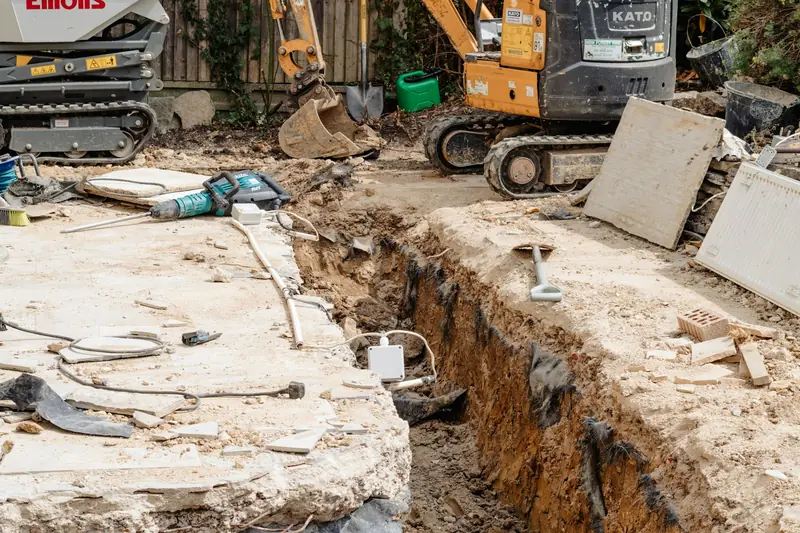
The distance from the meter to the house is the biggest single factor. A home close to the sidewalk needs far less trench and pipe than one set back at the end of a long driveway.
What sits on top of the line
Lawn and dirt are simple to dig and restore. Concrete, pavers, patios and mature landscaping add cutting, removal and replacement.
Soil, rock and slope
Hard or rocky ground, clay and steep hillside lots all slow digging and may call for hand work, shoring or extra bedding material.
Depth and access
Deeper lines take more excavation. Narrow side yards, gates and tight setbacks can limit the equipment that fits.
Pipe material and size
Copper and PEX differ in material and labor, and upsizing the line for a larger household changes the pipe and fittings needed.
Connections at each end
Tying into the meter side and the house can be simple or involved, especially where new pipe meets old steel or a worn shutoff valve needs replacing.
Repair, replace or reroute
Fixing one section, replacing the full run and moving the line to a new path are different scopes of work with different labor.
Permits and inspection
Permit fees are set by the city or county and vary with the work involved. Scheduling the inspection can also affect the timeline.
Emergency timing
A line that fails at night or on a holiday may need immediate work to stop the water before a planned replacement can follow.
Spend wisely
Ways to keep the job focused
- Find the leak first. Leak detection keeps the dig small and in the right place.
- Repair when the line is sound. A healthy pipe with one damaged section usually needs a repair, not a new line.
- Avoid concrete where you can. Rerouting around a slab can cost less than breaking and replacing it.
- Time it with other projects. If new landscaping or hardscape is planned, replace an aging line first so you do not dig up new work.
- Do not wait on a known leak. Water that keeps running wastes money on the bill and can wash out soil, which makes the eventual job bigger.
For background on the decision itself, see our guides on repair versus replacement and how long the work takes.
FAQ
Cost questions
Why won't you give me a price over the phone?
Because the factors that drive the cost, such as the length of the run and what sits on top of it, are things we need to see. A number given without seeing the property would be a guess.
Is it cheaper to keep repairing an old line?
Sometimes for a while, but repeat repairs on corroded pipe add up and each one means another dig. Once a line has failed more than once, replacement often costs less over the long run.
Can rerouting save money?
It can when the old line runs under concrete or the house. A new path through soil can avoid breaking and replacing a slab, which is often the costliest part of a job.
Want a number for your property? Call us.
We will explain what the job involves before quoting it.