Low Water Pressure in the Whole House: Causes and Fixes
When one faucet is weak, the problem is usually that faucet. When every tap in the house is weak, the cause is somewhere between the street and your plumbing. Here is how to narrow it down.
- By Diamond Bar Plumbers
- Published Nov 1, 2026
Whole-house low pressure is frustrating because it affects everything: showers, washing machines, sprinklers. The good news is that the list of possible causes is short, and some are easy to check yourself. Work through them roughly in this order.
Step 1: Ask the neighbors
If the street has low pressure too, the issue may be on your water provider's side: maintenance, a main break, or high demand. Check the provider's website or call them before doing anything else. If neighbors have normal pressure, the problem is on your property.
Step 2: Check the main shutoff valve
After a repair or a plumbing project, the main shutoff at the house is sometimes left partly closed. Find it, usually where the line enters the house or near the front hose bib, and make sure it is fully open. Older gate valves can also fail internally, staying partly closed even when the handle turns.
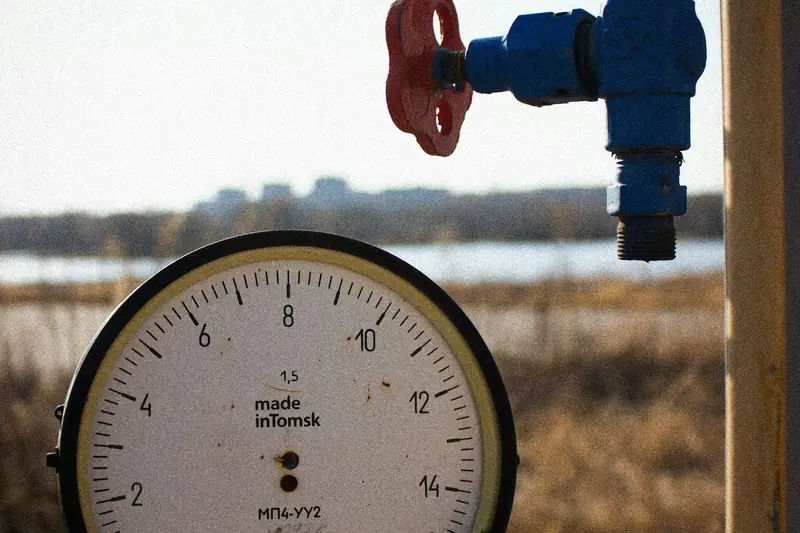
Step 3: Check the pressure regulator
Many homes have a pressure reducing valve, a bell-shaped fitting near where the line enters the house. It lowers street pressure to a safe level for household plumbing. When a regulator wears out, it can drop pressure well below where it should be. A plumber can test the pressure on both sides of it to confirm.
Step 4: Look for a leak
A leak on the main line diverts water before it reaches your fixtures. To check, turn off every fixture and appliance, then watch the meter. Walnut Valley Water District notes that if the sweep hand has moved or the reading has changed, you may have a leak. Other clues include a wet patch in the yard, a strip of greener grass, or a water bill that has been creeping up.
If the meter moves, our leak detection service can find the spot before anything is dug up.
Step 5: Consider the pipe itself
If there is no leak and the valves are fine, the line may be the bottleneck. Two common causes:
- Corroded galvanized steel. Rust builds up inside old steel pipe, shrinking the opening until it chokes the flow. Pressure fades gradually over years, and the water may look rusty at times. The fix is replacing the galvanized line.
- An undersized line. Older homes sometimes have a main line that was sized for fewer fixtures than the house has today. Adding bathrooms or irrigation zones over the years can outgrow it.
Is it pressure or flow?
These are easy to confuse. Pressure is the force pushing water through the pipe. Flow is how much water actually comes out. A corroded or undersized line can show decent pressure on a gauge with nothing running, then drop sharply when two fixtures are on at once. If your shower weakens every time someone runs the kitchen tap, that pattern points toward a restricted main line rather than a bad regulator.
Patterns that point to the main line
- Pressure has faded slowly over several years.
- Every fixture is affected, both hot and cold.
- Rusty or cloudy water shows up at times.
- The house is several decades old and the line has never been replaced.
- Neighbors on the same street have normal pressure.
Hot water only?
If only hot water is weak, the problem is likely the water heater or its connections, not the main line. Sediment buildup in a tank or a failing valve on the heater are common causes.
What you can safely check yourself
Several of these steps need no tools. You can confirm the main shutoff is fully open, run the meter test, and walk the yard looking for wet spots. A hose-bib pressure gauge from a hardware store can also tell you what pressure the house is seeing. Leave adjusting or replacing the pressure regulator, and anything involving cutting into the line, to a plumber.
Fixes, from simplest to largest
- Open a partly closed main shutoff, or replace a failed gate valve.
- Adjust or replace a worn pressure reducing valve.
- Repair a leak on the main line once it is located.
- Replace a corroded or undersized line from the meter to the house.
Most homes need only one of these. Working through them in order means you only pay for the fix the house actually needs.
What we check first when you call
When you call about whole-house low pressure, we check the simple things first: the shutoff, the regulator and the meter. If those are fine and the line is the cause, we explain whether a repair or a full replacement makes sense. Many homes in older neighborhoods in Pomona and West Covina trace low pressure back to original steel lines.
Call us and describe what you are seeing. We will tell you what we would check first.
Questions about your main line? Call us.
A person answers 24/7, and same-day visits are available.