Best Pipe for Water Line Replacement: Copper vs PEX vs Galvanized
If you are replacing a main water line, the pipe material matters. Here is how copper, PEX and old galvanized steel compare for a line that will be buried for decades.
- By Diamond Bar Plumbers
- Published Nov 1, 2026
Most main line replacements around Diamond Bar come down to two materials for the new line: copper or PEX. Many of the lines being taken out are galvanized steel. Each has a track record, and each has places where it fits better than the others.
Galvanized steel: what many homes are replacing
Galvanized pipe is steel coated with zinc to slow rust. It was common in homes built in the middle of the last century. Over the decades the zinc wears away and the steel begins to corrode from the inside. Rust builds up on the pipe walls, narrowing the opening a little more each year.
The results are predictable: falling pressure, discolored water and leaks, usually at threaded joints where the pipe wall is thinnest. Galvanized lines are rarely worth repairing more than once. If yours is galvanized and acting up, replacement is usually the next step.
There is also a regulatory angle. Under EPA's service line inventory rules, galvanized lines that are or were downstream of a lead service line are classified as "galvanized requiring replacement" (EPA).
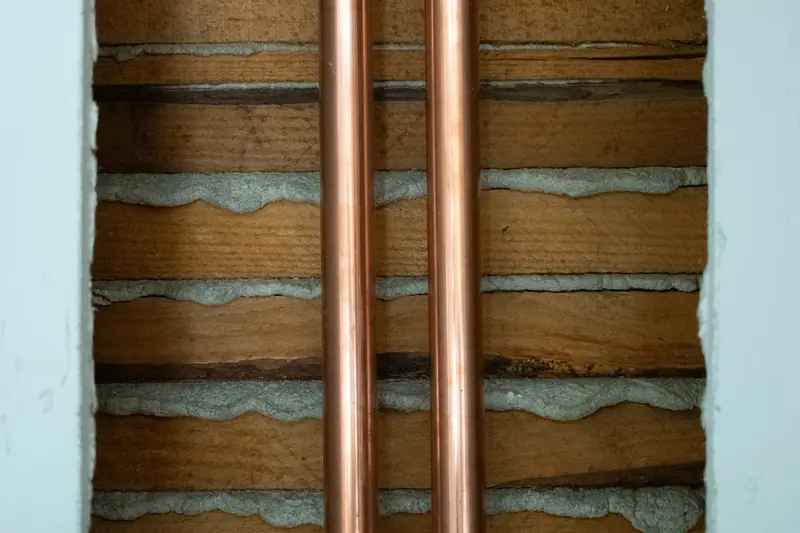
Copper
Copper has been a standard for water lines for generations. It is rigid and long-lasting, and inspectors and plumbers have worked with it for decades.
- Strengths: long track record, holds its shape, tolerates heat, and connections are well proven.
- Things to weigh: rigid pipe needs fittings at every change of direction, and some soil and water conditions can affect copper over time.
- Good fit for: straight runs, connections at the meter and house, and homeowners who prefer a traditional material.
PEX
PEX is cross-linked polyethylene, a flexible plastic tubing. California's path to accepting it was long: the California Building Standards Commission approved PEX for the state plumbing code in 2009, briefly repealed it in 2010 after a lawsuit, and reinstated it later that year (Contractor magazine). It is now a common choice for water lines.
- Strengths: flexible, so it bends around obstacles with fewer fittings; does not corrode; handles some ground movement better than rigid pipe.
- Things to weigh: must be rated for buried service and protected from sunlight before installation; the trench needs proper bedding so rocks cannot press on the tubing.
- Good fit for: long runs, curving routes, reroutes and hillside lots where the line changes direction.
How soil and terrain change the answer
Ground conditions around the area vary a lot. Hillside lots in places like Hacienda Heights and Chino Hills can see soil shift over time, and clay soils swell and shrink with moisture. Flexible PEX tolerates small movements well. On flat ground with a short, straight run, copper performs just as well. Our post on expansive soil explains why movement matters.
Pipe size matters too
Material gets the attention, but diameter matters just as much. Some older homes have lines that are small for a modern household with multiple bathrooms and an irrigation system. A replacement is the right time to look at whether a larger line makes sense.
What about the connections?
The weakest point of any line is usually where it connects. At the meter and at the house, the new line has to join existing fittings, sometimes older ones. Where new pipe meets old steel, proper transition fittings matter. This is also a good time to replace a worn-out main shutoff valve.
How we choose between copper and PEX
We do not push one material for every job. For each replacement we look at the route, the soil, the length of the run and how the line connects at each end, then recommend copper or PEX and explain why. If you have a preference, tell us. Both are proven choices when installed correctly.
What about plastic pipe like PVC?
You may see older homes with PVC or other plastic water lines. Some plastics are used for cold-water service lines in certain jurisdictions, but they are rigid, can become brittle with age, and depend heavily on solvent-welded joints. When we replace a line, we generally recommend copper or PEX, and we follow what the local code and inspector accept for buried service.
Questions to ask before choosing
- How long is the run from the meter to the house, and how many turns does it make?
- Is the yard hillside, clay or rocky, and has the soil moved before?
- What size line does the household need today, including irrigation?
- What fittings are at the meter and the house, and do they need replacing too?
- Are there plans for landscaping or hardscape that would affect the route?
Which pipe to pick for your line
If your line is galvanized, plan to replace it. If you are choosing between copper and PEX, both are sound; the better pick depends on your yard. Call us and we will walk through the options for your property.
Questions about your main line? Call us.
A person answers 24/7, and same-day visits are available.