Who Is Responsible for the Water Line From the Meter to the House?
When the main line leaks, the first question is usually who pays to fix it. In most local systems, the answer depends on which side of the meter the leak is on.
- By Diamond Bar Plumbers
- Published Nov 1, 2026
Water reaches your house through two separate pipes that meet at the meter. Knowing where one ends and the other begins tells you who to call, who is responsible for the repair, and what to expect.
The meter is the dividing line
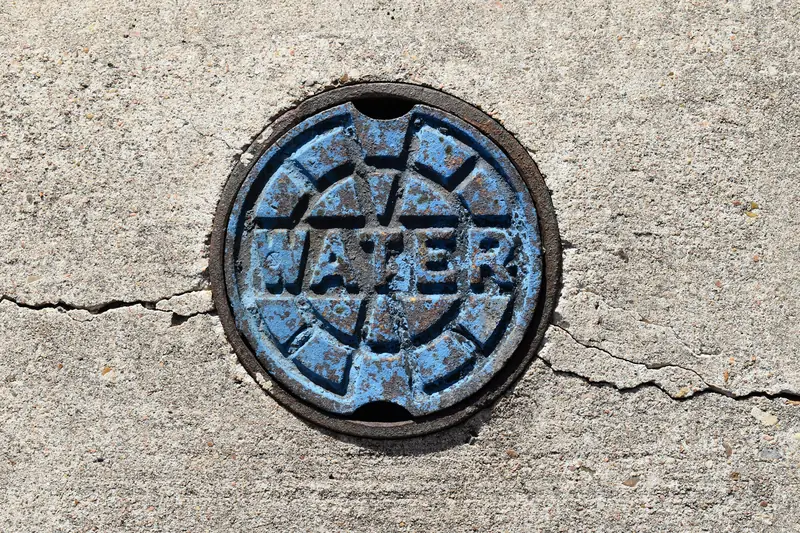
Your water provider owns and maintains the main under the street and the short pipe that runs from that main to the meter. The meter itself also belongs to the provider. Everything after the meter, including the line that runs to your house, belongs to the property owner.
Local providers say this plainly. Walnut Valley Water District, which serves Diamond Bar and parts of Walnut, Pomona, West Covina, Industry and Rowland Heights, states that "anything associated past the water meter (your home) is the customer's responsibility" and that customers are responsible for repairing leaks on their property.
What the provider covers
- The water main in the street.
- The connection from the main to the meter, often called the service lateral on the provider side.
- The meter and the meter box.
- Shutting water off at the street when a repair requires it.
What the homeowner covers
- The service line from the meter to the house, which homeowners usually call the main line.
- The main shutoff valve at the house.
- Every pipe, fixture and irrigation line on the property.
- Restoring landscaping or hardscape after a repair on the homeowner side.
How to tell which side the leak is on
Start at the meter box. If water is bubbling up on the street side of the meter, around the provider's pipe, or in the street itself, that is usually the provider's problem. Call them directly; most have a number for leaks and emergencies.
If the meter box is dry but there is a wet spot between the meter and the house, the leak is almost certainly on your side. The same is true if the meter keeps moving after you close the main shutoff at the house, since that points to the stretch of pipe between the two.
When it is not obvious, a leak detection visit can settle it before anyone digs.
Why it matters which provider you have
The meter split is common across the area, but the details of who to call are not. Some cities run their own water utilities, while other communities are served by a district or a private water company, and a few cities have several providers in different neighborhoods. In West Covina, for example, more than one company serves different parts of town. In unincorporated Rowland Heights, Rowland Water District serves much of the community while Walnut Valley Water District serves the easterly area.
The simplest way to know your provider is to look at the name on your water bill.
What about the shutoff at the street?
Many meter boxes have a valve on the provider side. In an emergency, providers generally want you to use the main shutoff at your house rather than the one in the meter box. If your house shutoff is broken or you cannot find it, call your provider for help, and consider having the house valve replaced when your line is repaired.
If the leak is on your side
- Close the main shutoff at the house if water is running freely.
- Note what you are seeing: where the water is, how fast the meter moves, and when it started.
- Call a plumber who works on main lines. A single break can often be repaired, while an old or repeatedly leaking line may need replacing from the meter to the house.
- Keep your provider in the loop if the work requires shutting off water at the meter.
Does homeowners insurance cover it?
It depends on the policy. Some policies cover sudden damage caused by a leak but not the pipe itself, and some offer separate service line coverage. Check your policy or call your insurer before assuming either way. We are not able to tell you what a specific policy covers.
A note for renters and landlords
If you rent, the line from the meter to the house is generally the property owner's responsibility, not yours. Tell your landlord or property manager as soon as you notice signs of a leak, and close the main shutoff if water is running freely. Landlords should keep the location of the shutoff and the meter box somewhere tenants can find it.
Shared and unusual setups
Some properties do not follow the simple one-meter, one-house pattern. Condos and townhomes may share a meter, and older lots sometimes have a line that crosses a neighbor's yard. In those cases, an HOA, a recorded easement or a shared agreement may decide who maintains which pipe. Check your HOA documents or title records if the route is unclear.
Meter, street and house: who handles what
Street side and meter: your water provider. Meter to house: you. If you have a leak on your side of the meter, call us and we will help you find it and fix it.
Questions about your main line? Call us.
A person answers 24/7, and same-day visits are available.